We coordinate DOT drug and alcohol collections at your workplace, yard, or fleet terminal under 49 CFR Part 40 — nationwide mobile dispatch plus partner clinic coverage. No unnecessary clinic trips for your employees. Call (219) 315-0345 or request a quote.
Services
DOT drug testing for employers — mobile on-site service nationwide
Need DOT drug testing for your drivers or covered employees? We coordinate mobile on-site collections at yards, terminals, and job sites nationwide — so your drivers don't miss a run for a clinic visit — and route donors through our partner clinic network when on-site dispatch isn't needed. We handle the paperwork, chain of custody, and TPA coordination. Call (219) 315-0345 or request a quote below.
Regulated collections with clean paperwork and realistic field coordination—for DERs, TPAs, and employers that need DOT drug and alcohol testing at terminals, yards, plants, and employer-staged locations nationwide.
DOT drug testing is federally regulated workplace testing for safety-sensitive employees under 49 CFR Part 40. Aviation employers operating under FAA certification are required to comply with 14 CFR Part 120 alongside Part 40 — covering pilots, mechanics, dispatchers, flight attendants, and other safety-sensitive employees. OnSite Employer Testing coordinates on-site and mobile DOT collection workflows nationwide when timing, location, and collector availability allow, with partner clinic options where on-site dispatch is not required.
DOT collections have to be right the first time
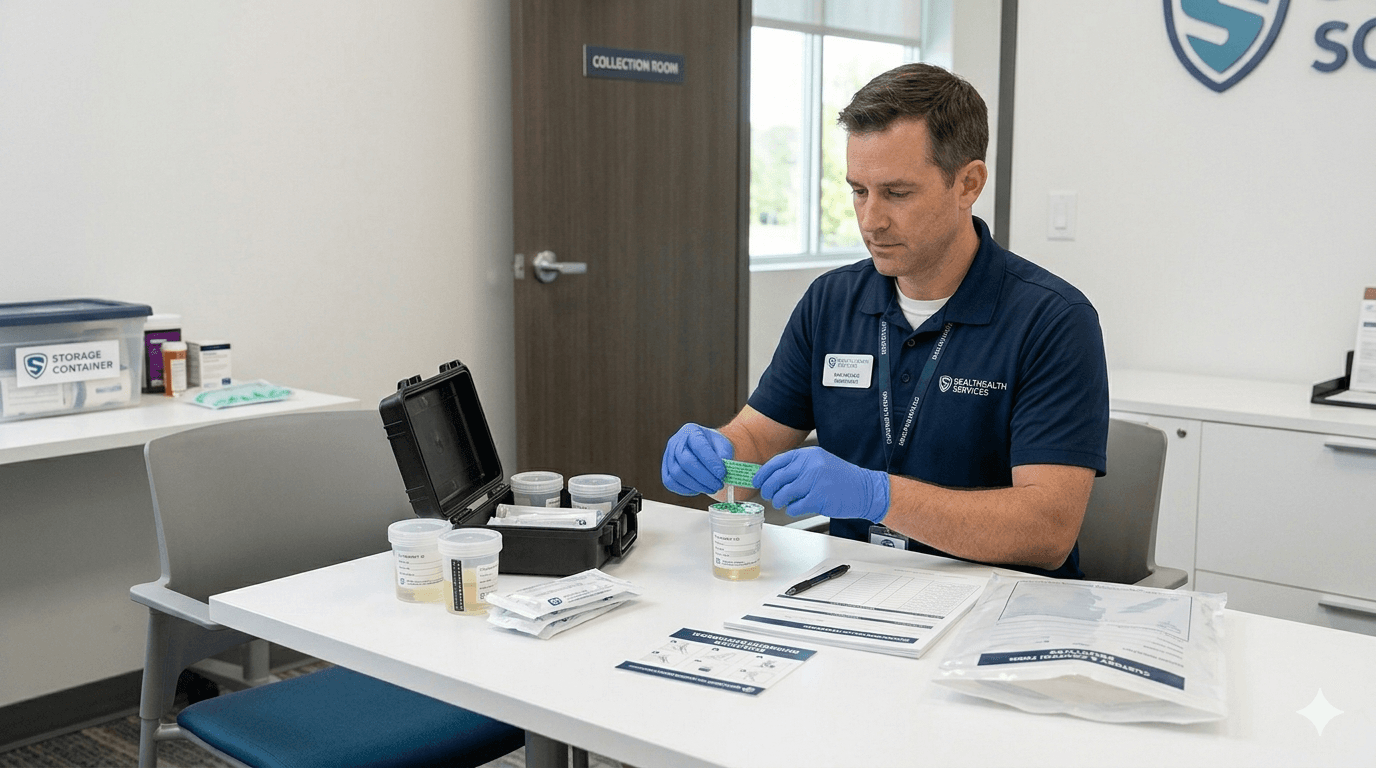
DOT testing is not just another workplace screen. It is a regulated collection process tied to safety-sensitive work, specific test reasons, and documentation rules the employer has to live with after the collection is over.
We support employers that need onsite and mobile DOT drug and alcohol collections executed with the right field discipline and a clean handoff to the DER, TPA, and laboratory path already in place.
For who falls under DOT coverage, see who is covered by DOT drug testing. For MRO review after the lab reports, see our MRO role guide.
Nationwide coverage — mobile on-site plus partner clinics
DOT collection support is coordinated nationwide. When operations allow, a certified collector comes to your yard, terminal, plant, or employer-staged location. When on-site dispatch is not needed or not available for a given site, we route donors through our 8,500+ partner clinic network so testing still happens under the right Part 40 paperwork.
Find your state and city coverage on our service areas directory — including markets like Houston, Atlanta, Charlotte, and hundreds of other employer location pages already published for this service.
Our headquarters and founding market are in the greater Chicago area, but DOT drug testing is not limited to Chicagoland. Share your site address at intake and we confirm collector or clinic availability before you schedule.
Who this page is for
This page is for:
DOT-regulated employers
DERs
Fleet safety teams
TPAs and consortia
Employers with mixed DOT and non-DOT populations
Companies that want mobile collections at terminals, yards, plants, and employer-staged locations
Blended sites should keep programs separate—see DOT vs non-DOT drug testing before you mix rosters or forms.
Common DOT testing events
Each test reason carries its own authorization, paperwork, and timing expectations. Collectors execute the order your DER or TPA places.
Pre-employment
- A covered employee must complete the required pre-employment process before performing safety-sensitive work.
Random
- Randoms must be managed through the correct regulated program and pool—not improvised draws from a supervisor's list.
Post-accident
- These events are often urgent and may include both drug and alcohol testing. See [[service:post-accident-drug-testing]] when alcohol windows matter.
Reasonable suspicion
- The employer needs the right documented authority before the collection is ordered. See [[service:reasonable-suspicion-drug-testing]] for field coordination.
Return-to-duty and follow-up
- These events require clean documentation and strict separation from ordinary testing. Confirm test reason and program flags with your DER before dispatch.
Why employers use onsite DOT collections
An onsite model works well when drivers or safety-sensitive employees are tied to:
Terminals
Yards
Dispatch schedules
Line-haul operations
Field sites
Locations where clinic travel creates delay or confusion
The procedure still has to meet DOT standards. The venue changes. The compliance obligation does not. On-site & mobile drug testing keeps donors on employer-controlled property when your program and site access allow.
What the employer needs to confirm
Before the visit, confirm:
Operating administration
Test reason
Whether drug, alcohol, or both are required
Whether observation applies
Site logistics
Who the DER contact is during the event
When alcohol is on the order, include it at intake so BAT equipment and sequencing are planned—see breath alcohol testing.
What we do and what we do not do
We support the collection and documentation process. We do not decide whether an employee is covered, whether the event qualifies, or what legal conclusion the employer should reach after the result is reported.
That division of responsibility is exactly what DOT programs require. Your DER, TPA, and counsel own program authority; collectors execute the authorized collection with Part 40 discipline. Employers who want OnSite to administer the random pool, Clearinghouse queries, and C/TPA paperwork can enroll through DOT Consortium & C/TPA services.
Common DOT questions
Do you offer DOT drug testing nationwide?
Yes. We coordinate DOT collections nationwide through mobile on-site collectors and our partner clinic network. Coverage depends on your site address, test type, and timing — confirm availability at intake. Browse markets on our service areas page.
Do you support FMCSA only?
No. Support depends on the order and the regulated context provided by the employer—FMCSA, FAA, FRA, FTA, PHMSA, USCG, and other modes when your program authorizes them.
Can you coordinate with our consortium or TPA?
Yes. Share your consortium or TPA routing, forms, and reporting path at intake so collectors arrive with the right paperwork and lab handoff instructions. If you need OnSite to run the consortium or C/TPA program itself, see DOT Consortium & C/TPA services.
Can you support alcohol testing too?
Yes, when alcohol testing is part of the order. See breath alcohol testing for BAT workflows and timing expectations.
Get a DOT testing quote
Share your operating administration, test reason, and site location—we confirm Part 40 collection logistics before you schedule.