Random workplace testing
Random Drug Testing Programs for Employers
Need a random drug testing program that clears selections without sending half the shift to a clinic? We come on-site for DOT and non-DOT random collections.
Unannounced selections, documented pools, and batched workplace collections — so your random drug testing program stays compliant without wrecking productivity.
A random drug testing program selects employees through a scientifically valid random process so no one knows who will be tested or when. DOT random rates are set by each modal agency; non-DOT random programs follow your written company policy. OnSite Employer Testing supports on-site and mobile collections after selections are made.
What Is a Random Drug Testing Program?
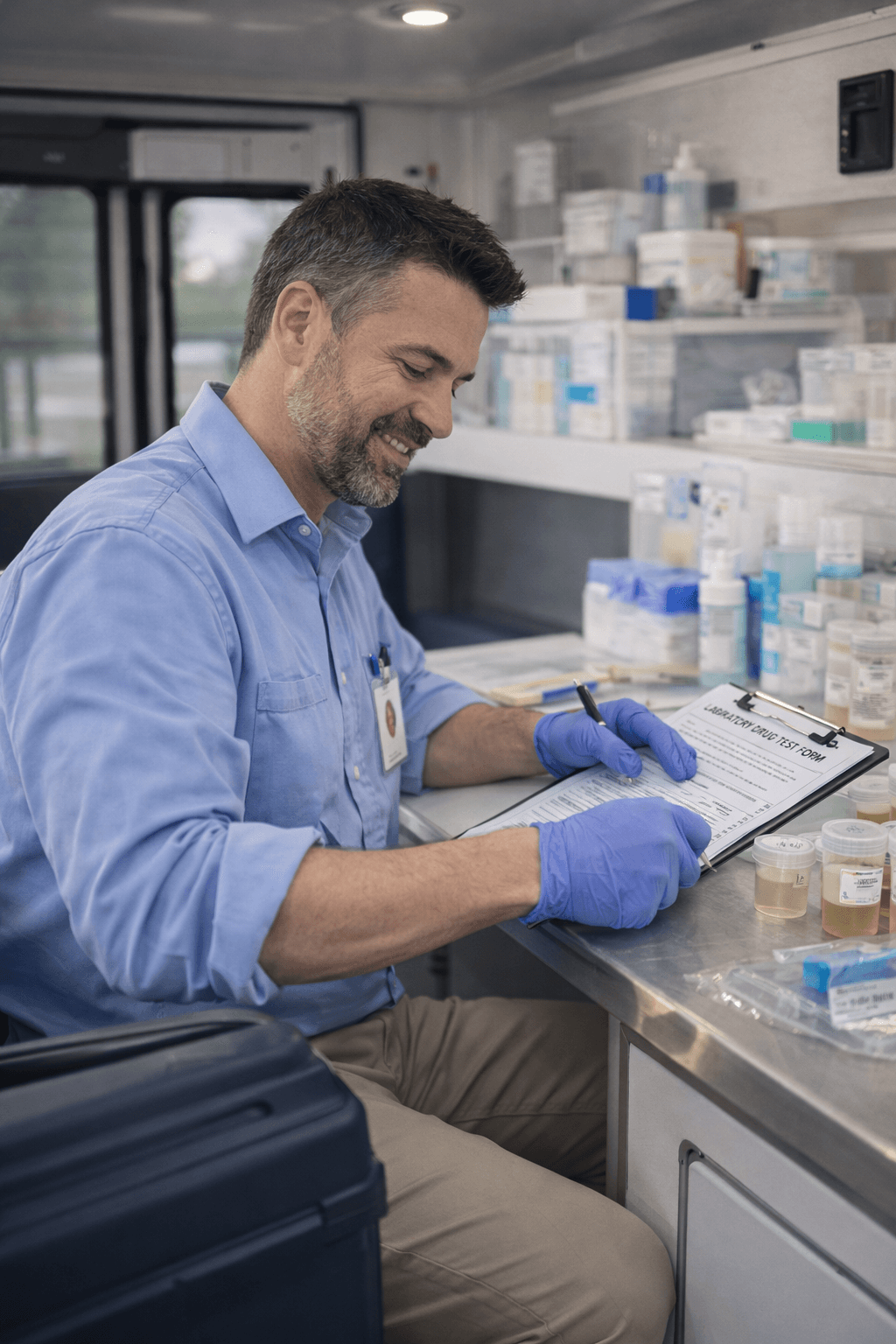
A random drug testing program tests a randomly selected percentage of employees throughout the year — unannounced. Employees are chosen by a scientifically valid random selection process, so no one knows when they might be selected.
Random testing is one of the most effective deterrents to workplace drug use because employees know they could be tested at any time. DOT employers should align rates with DOT drug testing requirements; non-DOT programs follow Non-DOT drug testing handbook rules.
How Random Testing Programs Work
Most employer programs follow the same operational loop:
Define who belongs in the pool (DOT covered employees, non-DOT policy group, or both as separate pools)
A TPA, consortium, or pool administrator runs scientifically valid random selections on a set cadence
Selected employees are notified and must report for testing as required by DOT rules or your policy
A collector completes the drug (and when ordered, alcohol) collection with chain-of-custody documentation
Results route to your MRO, TPA, or designated recipient while the pool continues drawing until annual rates are met
DOT Random Drug Testing Requirements
If you have DOT-covered employees (for example CDL drivers under FMCSA), federal rules require random drug and alcohol testing at modal rates. Illustrative published rates include:
| Agency | Drug Testing Rate | Alcohol Testing Rate |
|---|---|---|
| FMCSA (trucking) | 50% of covered employees/year | 10% of covered employees/year |
| FAA (aviation) | 25% | 10% |
| FTA (transit) | 50% | 10% |
| FRA (railroad) | 25% | 10% |
Annual rates can change by modal agency. Always confirm current percentages with your DER, TPA, or consortium before planning the year's draws.
Non-DOT Random Testing Options
For employees who are not DOT-regulated, your written company policy sets the random drug testing program rules:
You choose the annual testing rate (for example 25% or 50% of the policy pool)
Selections must still be random and documented — not supervisor-selected favorites
You decide specimen type and panel with your lab or TPA
State law may restrict random testing for certain employee categories — check with your HR counsel before launch
How We Manage Random Selection Support and Scheduling
Your pool administrator usually owns the random draw. We own the collection logistics after names are selected:
Coordinate collection windows around shift change, yard gates, plant breaks, or crew bases
Batch multiple selectees in one visit when schedules allow
Support DOT and non-DOT paperwork paths without mixing program rules
Provide clear ETAs so supervisors know when collectors arrive
Document the collection and hand off specimens to the designated lab path
We do not replace your TPA's selection software — we make sure selected employees get collected on-site without a clinic scavenger hunt.
Why On-Site Random Testing Works Better
Sending randomly selected employees to a clinic creates chaos:
- Employees disappear for 1–2 hours during shifts
- No-shows are common
- Supervisors lose track of who's been tested
When we come to you:
- Testing happens in a controlled on-site window
- Employees rotate through without leaving the floor
- Supervisors stay in the loop
- Batch collections are efficient for groups of 5–50+
Random drug testing program FAQ
What is a random drug testing program?
A random drug testing program selects employees through a scientifically valid random process and tests them unannounced throughout the year. The goal is deterrence and fair selection — no one should know who will be chosen or when. DOT programs follow federal pool and rate rules; non-DOT programs follow your written employer policy.
How does DOT random drug testing work?
DOT-covered employees are placed in a random pool managed by the employer, consortium, or TPA. Names are drawn at required annual rates for the applicable mode (for example FMCSA, FAA, FTA, or FRA). Selected employees must proceed to testing as required, and refusals are treated as positives under DOT rules. OnSite Employer Testing provides the on-site or mobile collection after the selection is made. See DOT drug testing for DOT collection support.
What percentage of employees need to be tested randomly?
For DOT programs, the percentage is set by each modal agency and can change annually — confirm current drug and alcohol rates with your DER or TPA. For non-DOT programs, your company policy sets the percentage. Many employers choose a documented annual rate such as 25% or 50% of the policy pool, subject to applicable state law.
How do I set up a random drug testing program?
Identify whether employees are DOT-covered, non-DOT, or both; put the right people in the correct pool; choose a TPA or consortium for scientifically valid selections; and define collection logistics. OnSite can run that consortium and C/TPA program for you — see DOT Consortium & C/TPA services. Then contact us at (219) 315-0345 or request a quote for on-site collections after each draw.
Set up your random testing program
Tell us your sites, DOT or non-DOT pool type, and shift windows — or call us now and we will confirm a realistic on-site collection plan.